Explore our photographic backdrops
Explore the materials, finishes and applications of our backdrops
We have been producing photographic backdrops for more than 20 years and testing them during real photo sessions. We select our materials on the basis of our own tests and experience in the photographic industry. This allows us to advise you not only on the design, but also on the material, storage method and finish that best suit the way you work.
Standard, Premium or Blocker?
The difference is not that one material produces a “better” photograph. Each has a matt surface and offers high print quality. Your choice should depend primarily on how the backdrop will be mounted and stored, and on the conditions in which you work.
Standard
Our most affordable option. It is stable, easy to roll onto a pole and well suited to a permanent studio. Backdrops up to 250 cm wide can be stored conveniently on a roll. Wider backdrops usually have to be folded, so they may need smoothing with a steamer before the next session.
Premium
Easier to tension, less prone to creasing and easier to smooth. It releases moisture more quickly after steaming and is usually ready to use almost immediately. It is a practical choice for frequent folding and mobile photo sessions.
Blocker
It behaves in a similar way to Standard, but has a black backing that reduces light showing through the material. It is useful when working close to a window, a light-coloured wall or another light source positioned behind the backdrop.
The material tensions more easily and hangs smoothly even when a telescopic crossbar bends slightly under the weight of a large backdrop. It does not create accidental ripples or folds. It can be mounted on stands, attached directly to a wall or used in a mobile studio. When folded without a bottom weight, it takes up less room in a parcel, which is especially convenient for international shipping.
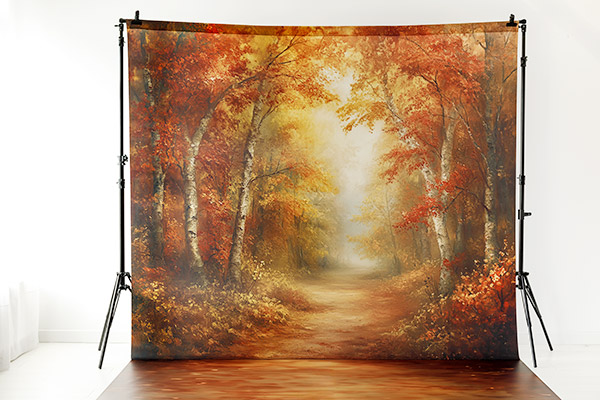
A finish matched to your mounting method
A weight can be sewn into the bottom of the backdrop. It tensions the fabric once the backdrop is hung and remains invisible in photographs because it is enclosed within the hem. We try to use a bottom weight whenever the intended use and transport method allow it. Every fabric can be supplied with a pole pocket or a bottom weight. Photographers who attach a backdrop directly to a wall can also order an unhemmed version, cut on all sides.
See the finishes and mounting methods
Fabric for the wall, vinyl for the floor
A fabric backdrop gives you greater freedom when positioning the light and provides excellent colour reproduction, which is why we offer it as a photographic backdrop wall. We sell vinyl exclusively as photographic flooring — it is stable, easy to clean and complements a fabric wall backdrop. Combining the two surfaces makes it possible to photograph full-length subjects and create a complete set.
One neutral vinyl floor can be combined with many different fabric backdrops, making it easy to create new sets without buying a separate floor for every design.
Why do we not use fabric as flooring?
Loosely laid fabric can move and wrinkle underfoot. For the floor, we recommend a vinyl surface designed specifically for this application.
Fabric backdrops during real photo sessions
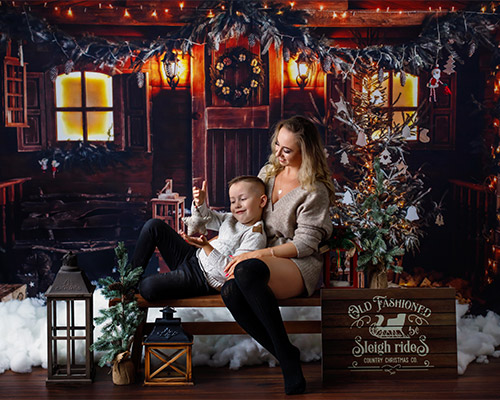
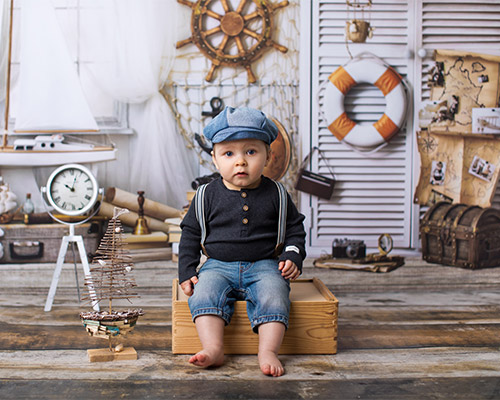
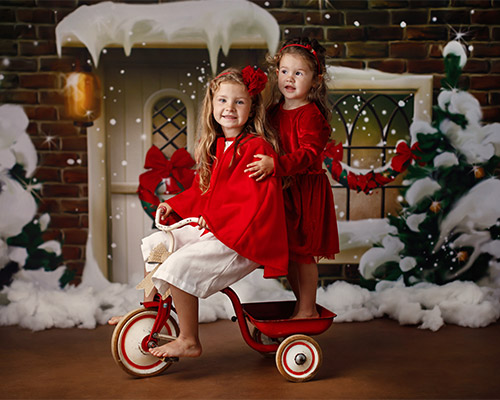
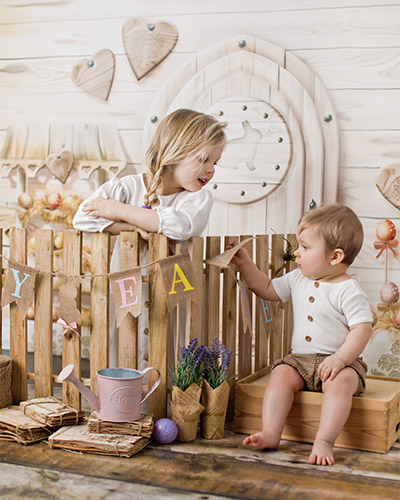
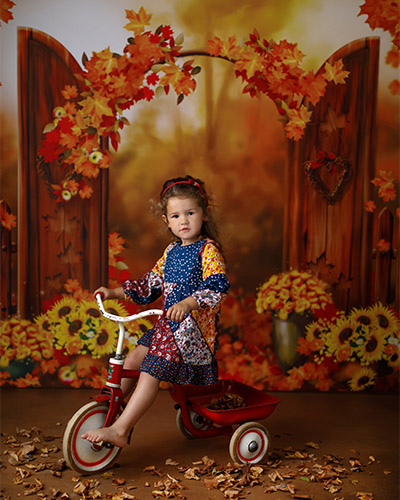
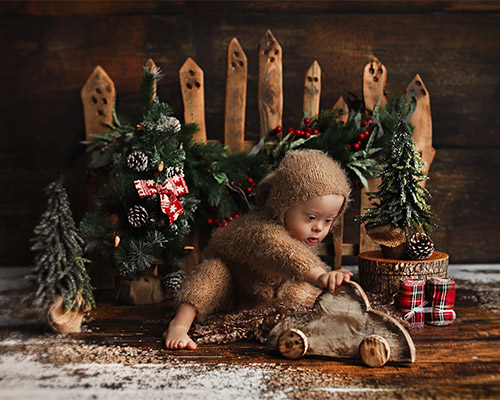
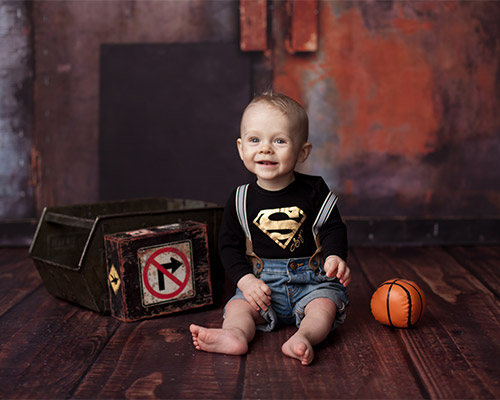
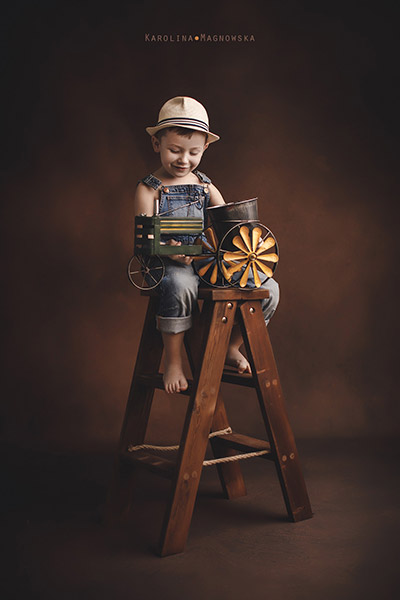
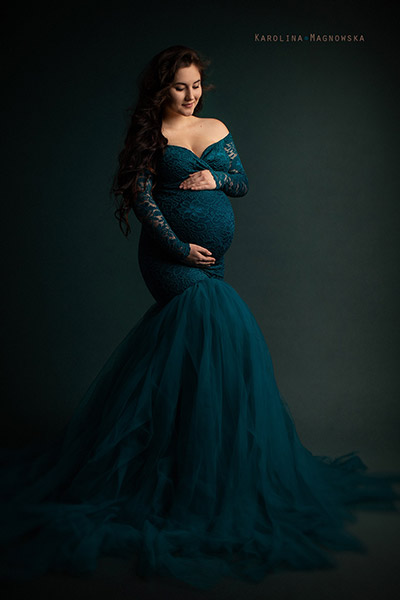
The photographs below show how different designs work with lighting, props and models of different ages.

Thick double-sided material for special applications
We developed it for wedding-dress photography, fashion sessions and other projects where a smooth, continuous transition from the backdrop wall to the surface beneath the model is important. It also solves the problem of ordinary fabric moving and wrinkling when placed on the floor. It retains a matt surface that reduces light reflections, while its construction allows both sides to be printed without either design showing through or affecting the colours on the opposite side.
This solution is intended for situations where a smooth transition between the backdrop and the surface beneath the model is particularly important.
Two different compositions printed on opposite sides.
It does not reflect light, and neither design shows through to the other side.
This is a thick and heavier material, so it is best suited to stationary photo sessions.
Models can walk on it in shoes, including high heels, and the print does not rub off during normal use.
The surface can be cleaned with damp wipes.
Do not fold this material. Store it rolled up or mounted on a backdrop support system.
This material does not have a pole pocket. Use photographic clips when hanging it from a crossbar.
Would you like help choosing the right option?
Tell us how you work, how you store your backdrops and the conditions in which you photograph. We will help you choose the material, size and finish.
 Polish